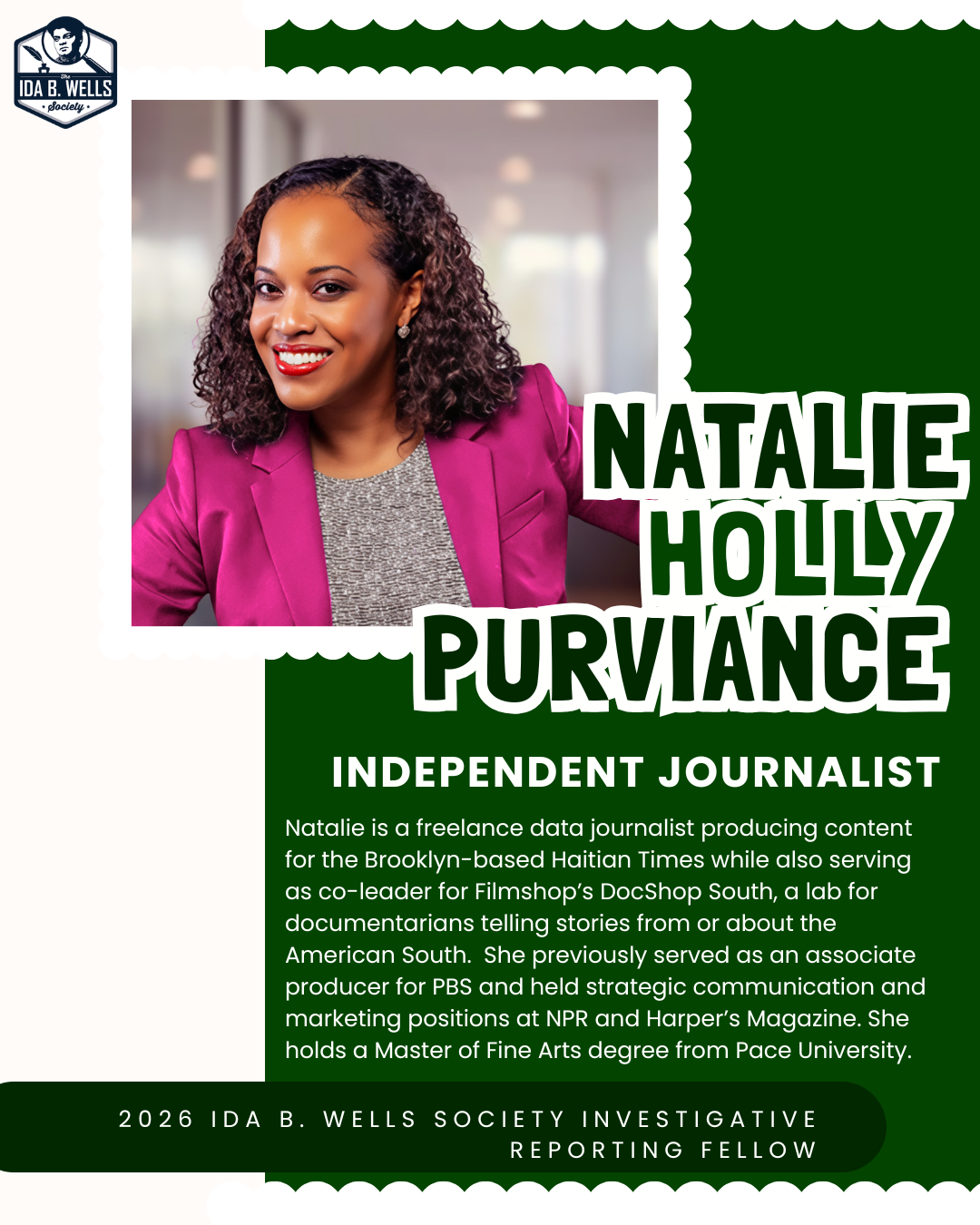
is a freelance reporter and a 2026 Ida B. Wells Society Investigative Reporting Fellow.
Learn more about Natalie in this Q&A.
Please briefly describe your reporting project.
I am investigating what the U.S. called its “flagship” Haiti earthquake recovery project, which fell short of its promises. Much of what was planned was never built, and the jobs never came close to projections. My reporting looks at how the project was designed and paid for, what the people behind it knew about the risks, and who is left to answer for it now that USAID has been dismantled.
What made you apply to this program?
I worked on a U.S.-funded project in northern Haiti after the earthquake and wanted to report on what I witnessed. The skills-building, mentorship, editorial support, and valuable network for my first full investigation were a major attraction.
What is the most impactful investigative reporting tool/trick you learned through this fellowship?
Building a strong document archive before starting interviews helped me see what the records could and couldn’t tell me, and who I needed to interview.
Why was it important to pursue/publish this story idea and what impact do you see it having?
Since USAID was dissolved in 2025, the agency that designed, funded and audited this project no longer exists to be held accountable. The public record also shows that the project never delivered on its promises, while local families were displaced. At a time when U.S. foreign aid is being cut and re-examined, this investigation will show what happens when large aid projects are planned without centering the people they are meant to serve. It will also show how future aid efforts might pursue sustainable results that improve livelihoods and promote stability in local communities, which in turn supports global well-being.
Why is investigative journalism important to you?
It’s important to me because it keeps a public record that makes the truth harder to deny, erase or distort. Institutions that spend public funds on other people’s behalf need to be held accountable, and the people who live with the results are too often the last to be heard. Investigative journalism brings those decisions into the open and puts affected communities at the center.

Leave a Reply