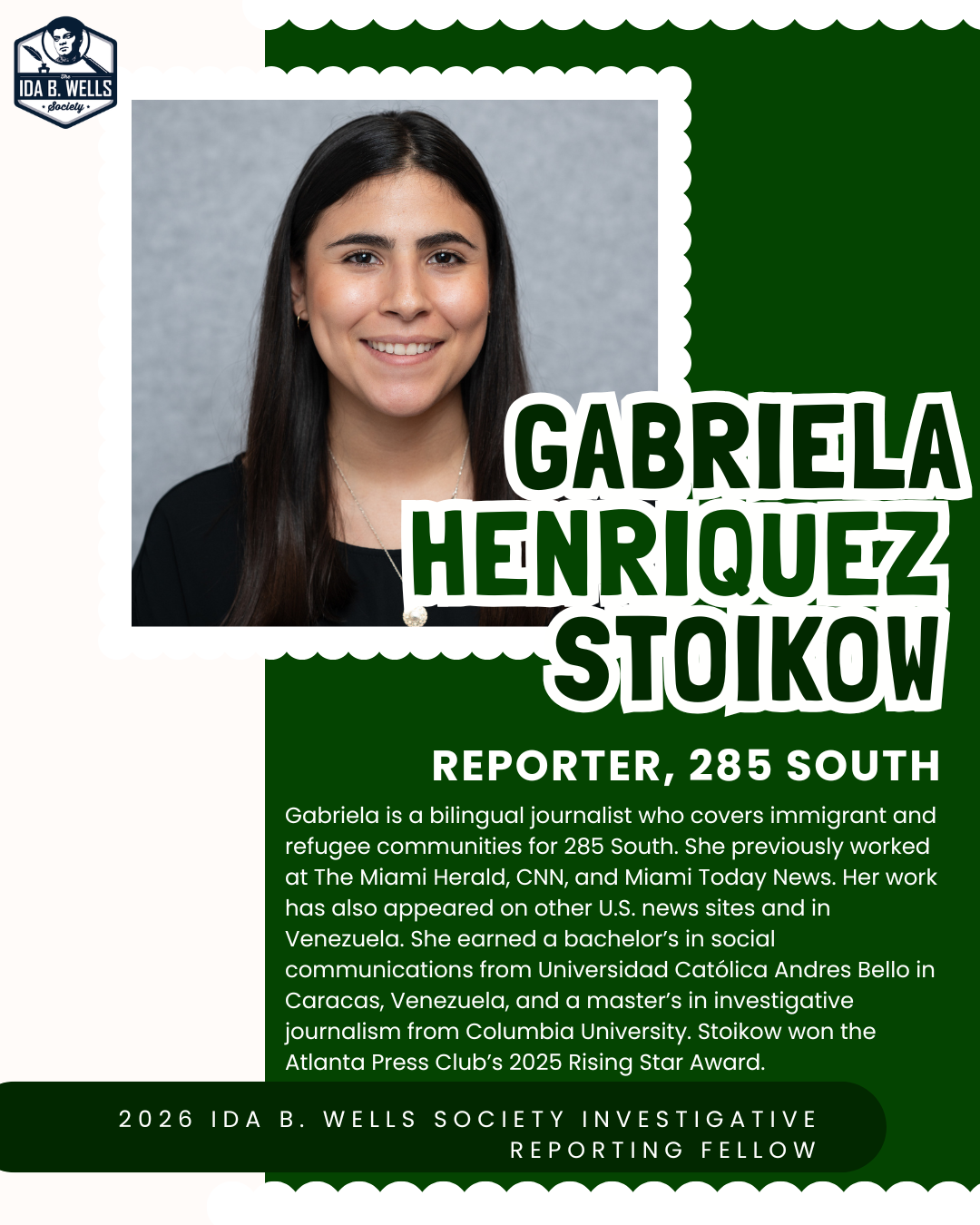
is a freelance reporter and a 2026 Ida B. Wells Society Investigative Reporting Fellow.
Gabriela published her investigation, “Georgia passed a law targeting undocumented immigrants who commit crimes, after a high-profile 2024 murder. It may not be doing much for public safety.” at 285 South.
Learn more about Gabriela in this Q&A.
Please briefly describe your reporting project.
My investigative project looks at the impact of Georgia’s House Bill 1105, passed in 2024 after the murder of Laken Riley, which requires local law enforcement to honor ICE detainer requests or risk losing state funding. Records obtained through an open records request found that since the law took effect, ICE detainer requests at the Gwinnett County jail rose about 68%. Detentions are increasingly tied to minor offenses like traffic violations (up from about 17% to roughly 24% of cases), while detentions for serious crimes declined as a share of the total charges. About 94% of those detained were Latino, mostly from Mexico, Guatemala, Honduras, Venezuela, and El Salvador.
What made you apply to this program?
I wanted to connect with other investigative journalists throughout the country and have access to mentors with an investigative background.
What is the most impactful investigative reporting tool/trick you learned through this fellowship?
Claude coding and how to deal with issues when making records requests.
Why was it important to pursue/publish this story idea and what impact do you see it having?
It was important because while most of the immigration coverage has been focused on large immigration enforcement actions, such as what we saw in Chicago or Minneapolis, or on the 287(g) program, there is little attention paid to detainer requests. Detainer requests are another form of collaboration between ICE and local law enforcement, but the general public knows much less about it. I see legislators in Georgia pushing again for the repeal of this law after reading the impact it has had.
Why is investigative journalism important to you?
Investigative journalism holds people in positions of power accountable. It sheds light on issues that are overlooked in the day-to-day news coverage and provides an opportunity to expose wrongdoing. I’ve always felt passionate about human rights and accountability, and I feel like I can significantly contribute to making positive change in my community through my investigative reporting.

Leave a Reply