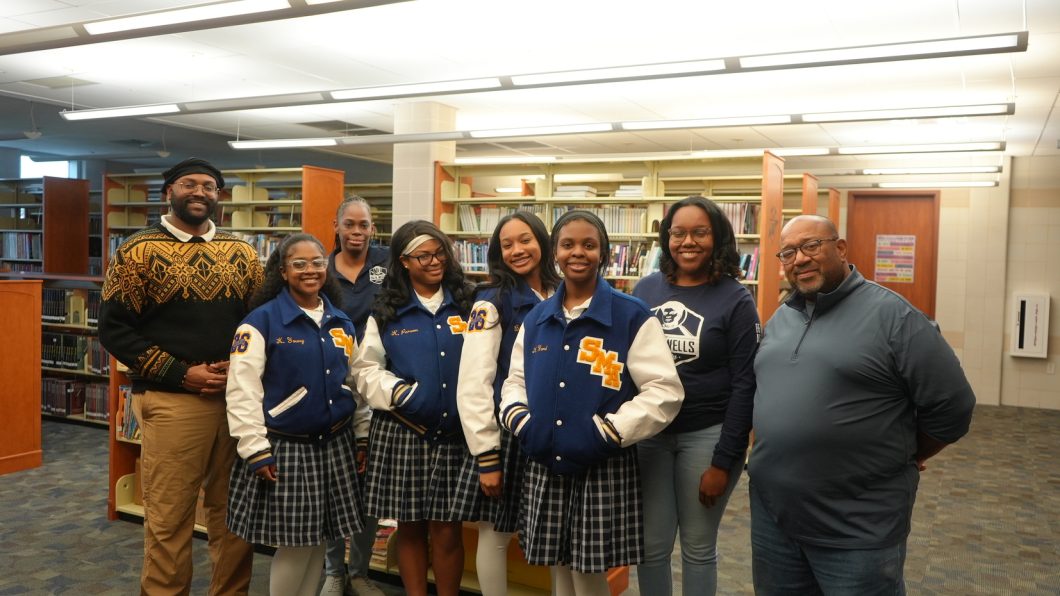
The Ida B. Wells Society has renewed its High School Investigative Partnership Program where Society staff works with journalism and language arts instructors at schools that serve primarily historically underrepresented populations and to give students hands-on education in investigative reporting.
This year, roughly 100 students in Atlanta and New Orleans are spending the school year learning journalism skills they can apply to their coursework. Guest speakers bring the topics to life through real world examples and discussion. In addition, this year’s high school partners received $10,000 grants in fall 2025. Through this work, students can see how they can impact their communities through awareness.
Westlake High School Students Learn About Journalism Advocacy
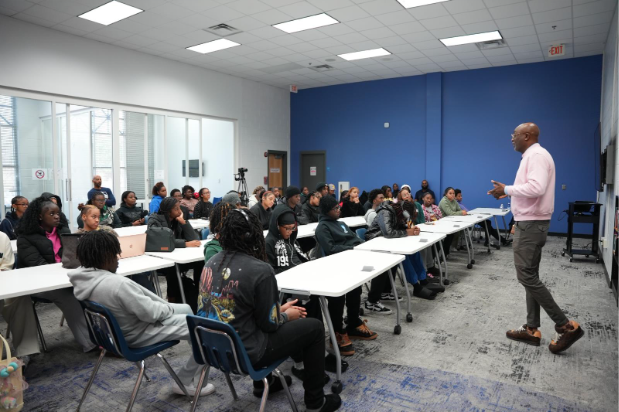
More than 60 Journalism students at Westlake High School in suburban Atlanta are learning about investigative journalism as a way of making a difference in the world. Young people wanting to make a change in their communities often participate in advocacy work; they learned that journalism can be an extension of that.
Mario Boone, an Atlanta-based veteran journalist, shared examples of advocacy journalism in his career and spoke to students about how they could implement this form of storytelling now.
Boone said there are a plethora of stories students can dig into from the classroom.
“Students can examine what books have been banned from their library, the high cost of extracurricular activities, and the lack of affordable Wi-Fi, which could limit their ability to do schoolwork from their Chromebooks,” he explained.
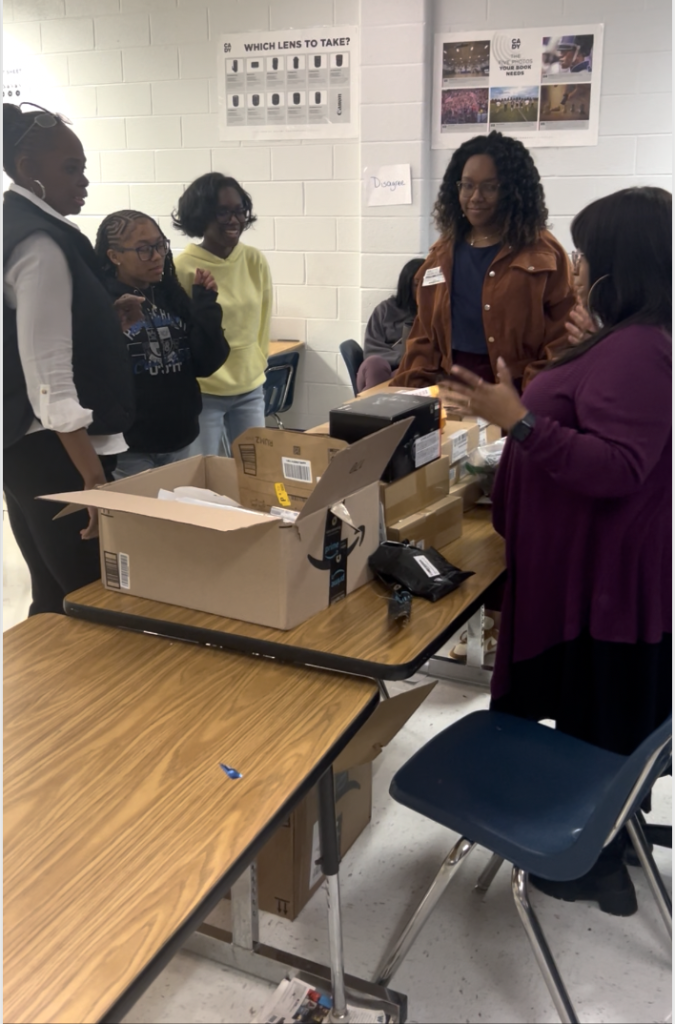
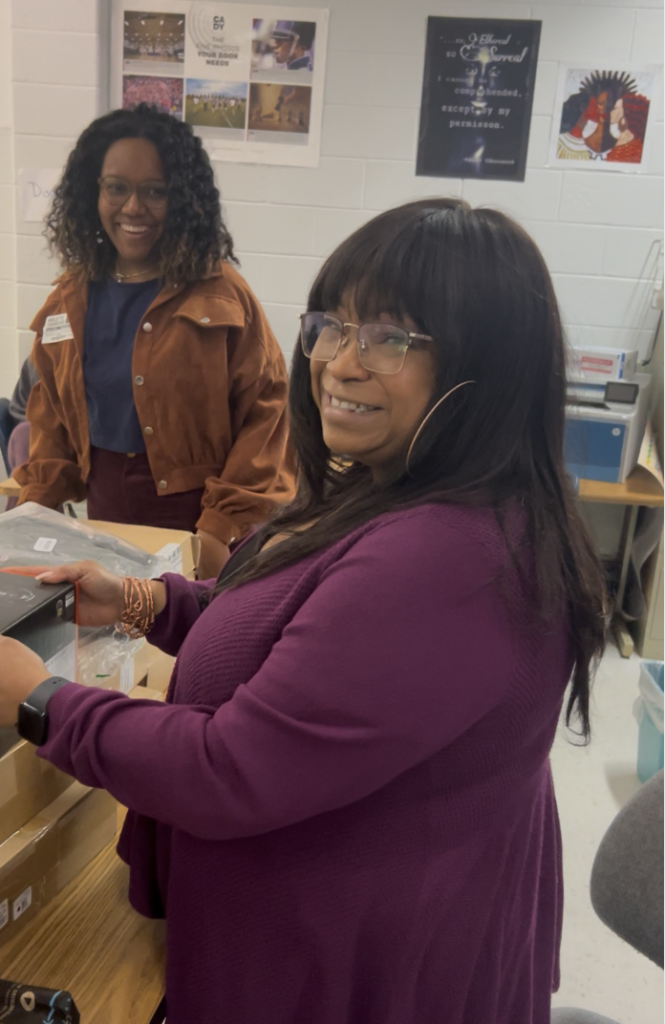
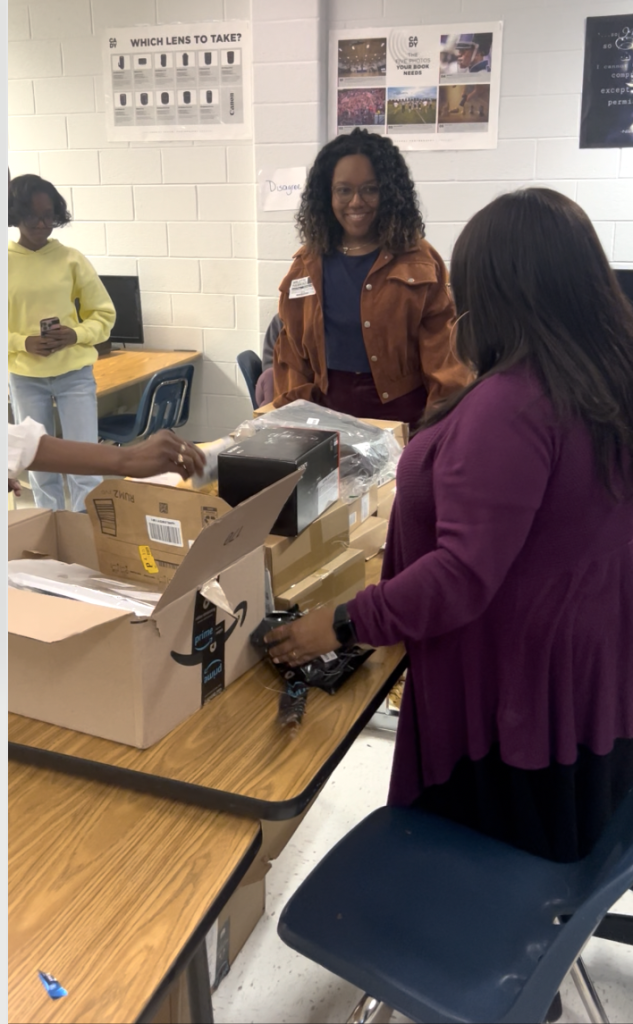
As part of its $10,000 grant, West Lake received new laptops, two DSLR cameras, and accessories to enhance the class and projects students are pursuing. Mia Grant, the school’s journalism teacher, said receiving the new equipment had an immediate impact.
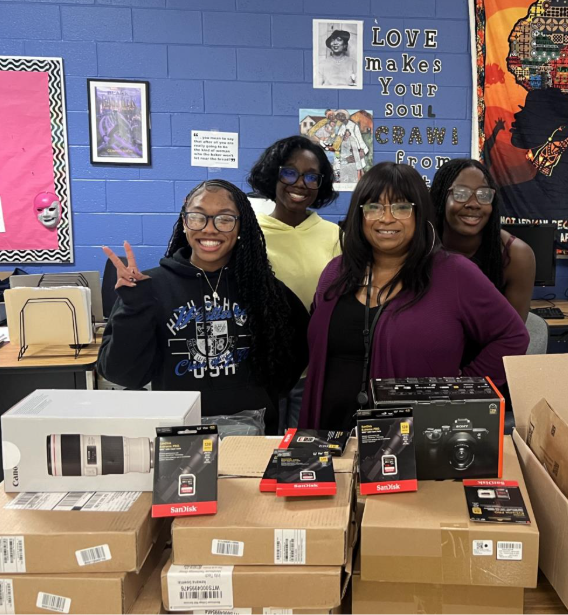
“The new camera equipment has now inspired my main photographers to try various settings, and they will compete later in the spring with our yearbook company’s photography competition,” she said. “The computers are a godsend; students who don’t have computers at home can check out a computer and complete their work at home. This is something that, in all my 25 years of teaching journalism, was impossible.”
Grant’s classes produce the school’s yearbook and publish a magazine called The Unspoken. The upcoming edition will feature exposés on the cost of participating in school activities, which are quite significant, and the school lunch program (a tale of two schools).
Grant said the new computers also are helping one student overcome design fears while completing a data-driven story.
“The student who completed the lunch article wants her piece published, and she has taken on the challenge of completing the layout for it as well,” Grant said. “I couldn’t get her to do the layout at the beginning of the year because she was intimidated and easily frustrated by the inconsistency of our desktop computers. When she started using the computers given to us (by the Society), her fears disappeared.”
St. Mary Students Dive into Topics Close to their Community
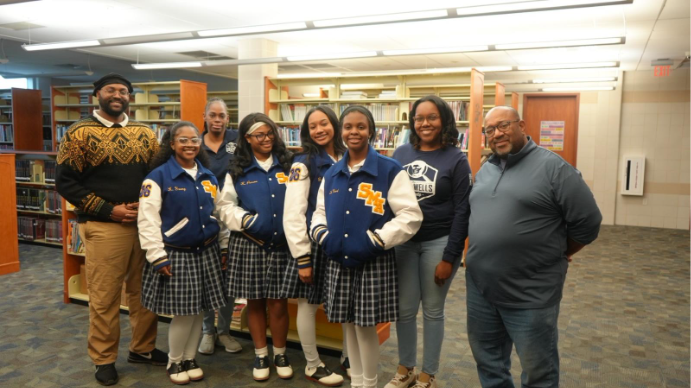
Students at St. Mary’s Academy, an all-girls school in New Orleans, are drafting stories based on topics impacting their communities.
The focus ranges from natural disasters to human trafficking and censoring. On a recent visit to the school, the Ida B. Wells Society team met the class and learned more about their projects.
Will New Orleans Be Ready for the Next Killer Hurricane?
Many people reflect on Hurricane Katrina, the powerful storm that took place in the crescent city 20 years ago, but these students were not even born then. They interviewed family members about their experiences with many of them saying the storm “changed their life.” The students dove into the question, “Will New Orleans be ready for the next killer hurricane?”
Human Trafficking
Human trafficking is a concern across the nation. Students shared their awareness of human trafficking through national news reports regarding the Epstein files and charges against music mogul P. Diddy. However, they are also familiar with its impacts on their community. Two nuns with close ties to St. Mary’s Academy work to combat human trafficking by helping those at-risk of being targeted in their community.
Censorship
In the era of social media, the conversation around censorship has evolved with the digital age. Students are learning about how some posts about current events are being “shadow banned,” or prevented from being posted to social media depending on their content. With technology having facial recognition and/or tracking capabilities, the students also discussed how those resources have impacted deportation efforts in our country.